


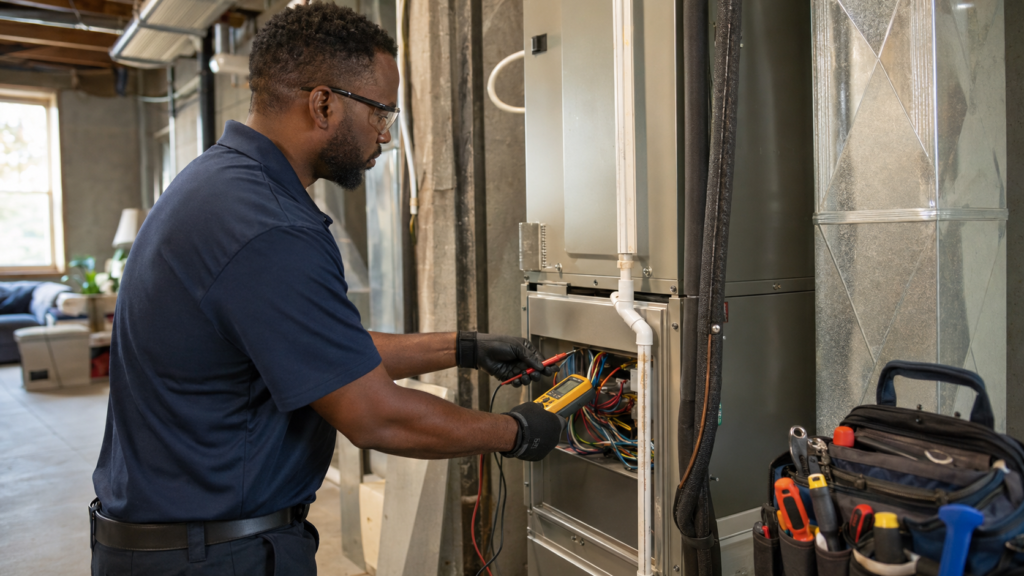
A professional AC service company can help your cooling system last longer by reducing unnecessary strain, identifying developing problems, and completing repairs before they cause wider equipment damage. Consistent care is especially important during hot Kansas City summers, when air conditioners may operate for extended periods.
Able Heating and Cooling helps homeowners understand what their equipment needs to operate reliably. Timely air conditioner repair can address performance changes that might otherwise shorten the system’s useful life.
How Does a Professional AC Service Company Extend System Lifespan?
A professional AC service company extends system lifespan by keeping airflow, electrical components, drainage, and mechanical operation within appropriate conditions. Technicians can identify worn parts, restrictions, and performance problems that cause the air conditioner to work harder than necessary.
No service can guarantee how long a system will last. Equipment age, installation, usage, maintenance history, and operating conditions all matter. However, professional attention can help prevent avoidable stress and support more dependable performance throughout the equipment’s service life.
Why Does Professional AC Care Matter?
An air conditioner is made up of components that must work together. A problem in one area can affect the rest of the system. Restricted airflow, for example, can interfere with comfort and contribute to longer cooling cycles. A worn electrical component may cause unreliable startup or repeated shutdowns.
Professional care also gives homeowners useful information about equipment condition. Instead of waiting for a complete breakdown, you can make repair and maintenance decisions based on how the system is actually operating. This is one reason choosing an experienced AC company matters.
Which Problems Can Shorten an Air Conditioner’s Life?
Air conditioners naturally experience wear, but certain conditions can accelerate it. Common concerns include:
- Dirty or unsuitable air filters that restrict airflow
- Blocked supply or return vents
- Debris or vegetation crowding the outdoor unit
- Drainage problems or recurring moisture near equipment
- Loose, damaged, or failing electrical components
- Unusual noises that indicate mechanical wear
- Frequent short cycling or unusually long operating cycles
- Delayed repairs that allow one problem to affect other parts
Homeowners often notice the effects before they know the cause. Weak airflow, uneven cooling, unusual sounds, higher energy use, or difficulty reaching the thermostat setting can all signal that the system needs attention.
What Happens During Professional AC Service?
The process begins with a discussion of the symptoms, when they started, and whether system performance has changed. A technician may then examine the thermostat, filter condition, accessible electrical components, drainage, indoor airflow, outdoor equipment, and general cooling operation.
The exact inspection depends on the equipment and the reported concern. If a repair is needed, the technician can explain the findings and recommend an appropriate next step. This professional evaluation is more reliable than replacing parts based only on a symptom, since several AC problems can produce similar behavior.
How Can Homeowners Reduce Daily Strain on Their AC?
Homeowners can support system longevity between professional visits by following the equipment manufacturer’s filter guidance, keeping vents open and unobstructed, and maintaining clear space around the outdoor unit. Thermostat settings should also be reasonable for the weather rather than forcing the system to chase an extreme indoor temperature.
Pay attention to changes in sound, airflow, odors, moisture, and cooling time. A small performance change is often easier to address before the system stops working. The ENERGY STAR HVAC maintenance checklist offers additional guidance for ongoing heating and cooling care.
Why Is Professional Diagnosis Safer Than DIY Repair?
Homeowners can safely handle basic tasks such as checking thermostat settings, replacing accessible filters, and keeping the outdoor area clear. Internal electrical, refrigerant, and mechanical problems should be left to trained professionals.
Attempting to diagnose internal equipment without the appropriate training and tools can create safety risks, damage components, or make the original problem harder to identify. Understanding common DIY HVAC risks helps clarify where basic homeowner care should end and professional service should begin.
What Are the Long-Term Benefits of Timely AC Service?
Timely professional service can support steadier cooling, better airflow, more reliable operation, and fewer surprise disruptions. Addressing a developing issue may also protect surrounding components from the additional stress caused by an unresolved problem.
Working with a consistent service provider creates a clearer picture of the equipment’s condition over time. Able Heating and Cooling is family-owned and operated, and information about our company reflects more than 10 years of heating and cooling service throughout the Kansas City metro area.
When a Small Airflow Change Signals a Larger Concern
Consider a homeowner who notices that the house still reaches the thermostat setting, but the airflow feels weaker and the air conditioner runs longer each afternoon. Because the home remains cool, it may be tempting to wait until the system fails.
A professional inspection could identify an airflow restriction or another developing issue before peak summer use creates additional strain. Scheduling service early gives the homeowner an opportunity to correct the cause under controlled circumstances instead of reacting to a complete cooling loss on a hot day.
Key Ways to Support a Longer AC System Lifespan
- Schedule professional attention when cooling performance changes.
- Replace or clean accessible filters according to appropriate guidance.
- Keep indoor vents and outdoor equipment areas unobstructed.
- Do not ignore unusual noises, odors, leaks, or repeated shutdowns.
- Avoid internal electrical, refrigerant, and mechanical DIY repairs.
- Use professional findings to plan repairs and future equipment decisions.
A longer system lifespan is not the result of one isolated task. It comes from consistent care, reasonable operation, timely repairs, and attention to changes before they become major problems.
Frequently Asked Questions About Professional AC Service
Can regular service guarantee that my air conditioner lasts longer?
No company can guarantee an exact equipment lifespan. Professional service can reduce avoidable strain and identify problems that might otherwise contribute to premature failure.
How do I know when my AC needs professional attention?
Schedule service if you notice weak airflow, uneven temperatures, unusual noises, strange odors, recurring moisture, short cycling, or longer cooling times. Sudden electrical symptoms or burning odors require more urgent attention.
Can a professional service every brand of air conditioner?
Service capabilities may vary by company and equipment. When scheduling, provide the system brand and describe the problem so the company can confirm that it services your equipment.
Should I repair or replace an older AC system?
The answer depends on the equipment’s age, condition, repair needs, and recent performance. A professional inspection can provide useful information for comparing the available options.
What AC maintenance can I do myself?
Homeowners can check thermostat settings, maintain accessible filters, keep vents clear, and remove nearby outdoor debris. Repairs involving internal electrical or mechanical components should be completed by a trained technician.
Schedule Professional AC Service in the Kansas City Metro
Do not wait for a complete breakdown to address declining cooling performance. Able Heating and Cooling provides professional service focused on dependable operation and honest pricing. To have your system evaluated, schedule service or call Kansas City at (816) 453-8650, Lee’s Summit at (816) 554-0646, Blue Springs at (816) 220-4737, or Independence at (816) 254-5350.